
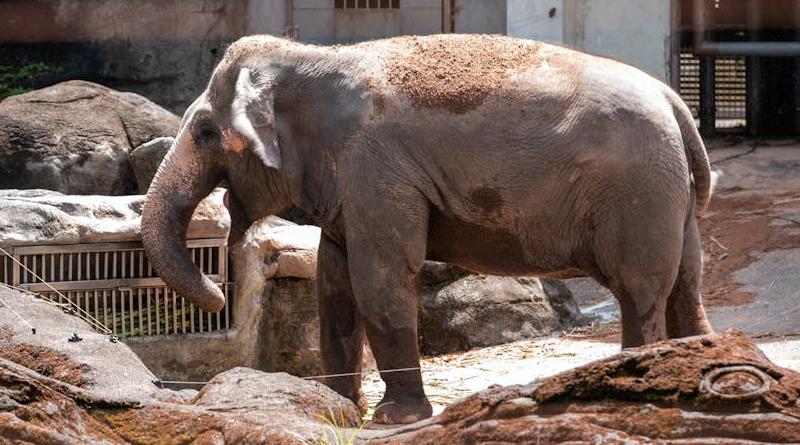
ELEPHANTS IN ZOOS
For the Born Free Foundation it all started with just one elephant – Pole Pole. She was a young African elephant, born in Kenya, who was taken from the wild and tragically died alone at the age of just 17 at London Zoo, United Kingdom, in 1983. It was the plight of this elephant, and the tireless efforts of our co-founders to save her, that ignited the creation of Zoo Check in 1984, which went on to become the Born Free Foundation. Dismissed at the time by the zoo’s director as a ‘nine-day wonder’, Born Free is today a world-renowned force for wildlife and, thanks to our tireless campaigning, there are no more elephants at London Zoo.
However, at the time of writing, there remain over 500 elephants in over 140 zoos across 31 European countries, including 49 elephants across 10 zoos in the UK.
The exploitation of elephants in captive environments is not new. Humans have captured and used elephants for thousands of years, with evidence dating back to around 2000 BCE in the Indus Valley and Southeast Asia. Elephants were initially valued for their strength, intelligence, and ability to perform heavy labour such as hauling logs and clearing forests. They were also utilised in warfare. To this day, despite increasing ethical, welfare and conservation concerns, elephants continue to be used in religious ceremonies, tourist activities, circus performances and zoo exhibits.
Research and publications from the early and late 2000s highlight issues for zoo-housed elephants, including limited space, inadequate social groupings, reduced survivorship, and health problems such as foot and joint disorders and obesity. This increased concern for elephant welfare in UK zoos resulted in the establishment of the Elephant Welfare Group (EWG) in 2010 following a review by the UK Zoos Forum (now known as the Zoos Expert Committee (ZEC)). Its creation aimed to ensure that zoos met the highest welfare standards, supported long-term conservation goals, and aligned with government and scientific recommendations for the humane care of elephants in the UK.
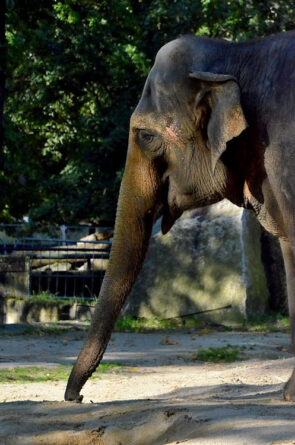
In 2011 Lord Henley, then Minister responsible for animal welfare, stressed “the option of looking at the scope for phasing out the keeping of elephants in the UK in the future if there is little or no evidence of improved welfare”. Lord Gardiner of Kimble later reasserted this statement at a 2017 elephant stakeholder meeting. The EWG was given a ten-year timeframe to, inter alia, review the welfare of elephants housed in UK zoos/collections, monitor improvements over a defined 10-year period, and assess whether welfare outcomes had improved and whether continued keeping of elephants in zoos was justifiable under the evidence.
Zoos within Great Britain are licensed under the Zoo Licensing Act 1981 (as amended). Section 1A (c)(i) stipulates that zoos must provide “each animal with an environment well adapted to meet the physical, psychological and social needs of the species to which it belongs”. The legislation is expanded upon within the Secretary of State’s Standards of Modern Zoo Practice (SSSMZP), which includes elephant specific standards within Appendix 8.8, most recently updated in 2017. The latter will be replaced by the Standards of Modern Zoo Practice for Great Britain in May 2027.
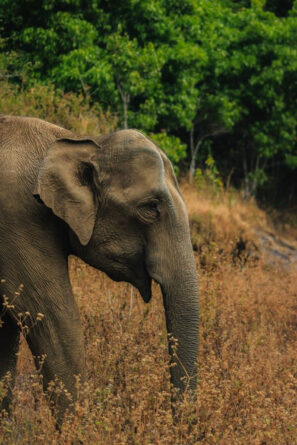
In 2021, the EWG presented their report to the ZEC who are responsible for advising the UK government on matters relating to zoos. The findings of the EWG report are understood to have been considered during the creation of the revised zoo standards for Great Britain, including whether the keeping of elephants in zoos should be phased out.
Following written and verbal stakeholder consultations, the ZEC recommended, “ZEC and the majority of the consultees feel at this stage there is not enough evidence presented in the Report to recommend the phasing out of elephant keeping in the UK”.
Despite this recommendation, significant concerns persist for the welfare of elephants kept in UK zoos when the findings of the EWG report are compared to previous findings from the 2000s.
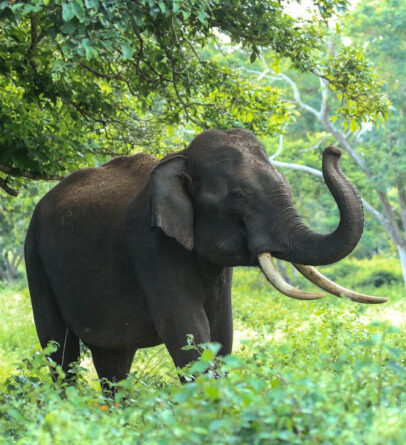
Elephants are intelligent, highly social, and emotional beings, who form lifelong family bonds and mourn their dead. They navigate vast landscapes, remember watering holes from decades previously, and even show empathy toward other species. Related elephants live in a layered society of families which may come together and break apart in a process known as “fission-fusion”. In 2008, the mean group size of elephants in UK zoos was 4.1. By the end of the EWG study period in 2019, the mean group size was 4.3. This is in contrast to median herd sizes in the wild of 9 to 16 for African savanna elephants (Loxodonta africana) and 7 to 10 for Asian elephants (Elephas maximus). As of October 2025, it is estimated that there are 21 elephants across Europe, including two elephants in UK zoos, that are kept in solitary conditions with no social contact with any other elephants.
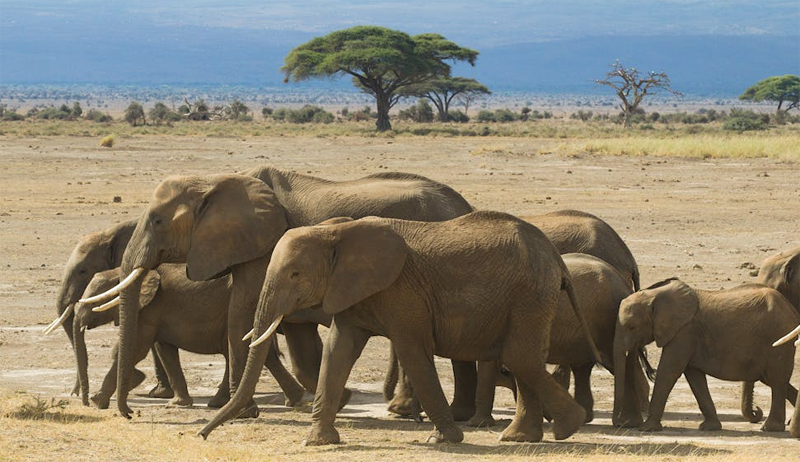
Elephants range over vast distances, with home ranges of 14 – 10,738km2 being reported for African savanna elephants and 34 – 997km2 for Asian elephants. The average enclosure size for elephants in UK zoos was reported to be 18,266m2 (0.018km2). Seven of the eleven zoos that held elephants during the period of the EWG’s 10-year study had enclosures smaller than the reported average. For perspective, of the ten zoos currently keeping elephants within the UK, eight have an enclosure which is smaller than their visitor car park. The EWG report identified that space in zoos “remains too small and too unvaried” for elephants to exhibit a full range of natural movements and behaviours.
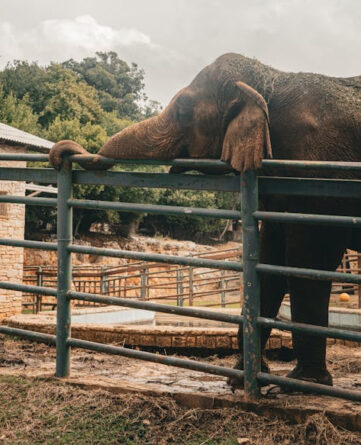
Additionally, the report highlights that premature mortality and shortened lifespans remain “major problems” with those animals born into captivity suffering from an “atypically short lifespan”. As found in 2008, the first-year mortality of zoo-born elephants remains three times higher than that observed in the wild. Mortality in captive born elephants under the age of five is approximately 40%, largely due to captive born elephants being far more susceptible to a haemorrhagic disease which predominantly afflicts juvenile Asian elephants following the activation of Elephant Endotheliotropic Herpes Virus (EEHV), which has co-evolved alongside elephants throughout their evolutionary history. Overall, the median lifespan of captive born individuals was found to be approximately 20 years and no elephants currently kept in zoos across Europe have reached the maximum ages seen in free-living elephants (75-80 years).
When the findings of the EWG report are considered in the context of the ZEC’s recommendation to continue keeping elephants in UK zoos, it highlights that from the outset of the EWG study, there was no clear ethical framework to identify what constituted ‘improvement’. Perhaps more importantly, no attempt was made to establish the level of improvement necessary in order to determine that the welfare needs of elephants were being sufficiently met and to justify their continued captivity. Additionally, it failed to emphasise the unsuitable climate that exists in the UK for elephants and the impact it can have on elephant health, and on the functional space elephants have available to them, particularly in the winter given that only 50% of UK zoos provided their elephants with 24/7 access to their outdoor enclosures.
Furthermore, the report only focused on one aspect of keeping elephants in zoos – welfare. It did not cover the ethics of elephant keeping, or the debate over the claimed conservation, education or research roles of those elephants. Nor did it fully consider the psychological welfare of elephants outside of behavioural indicators. This is despite these aspects being fundamental to developing a rounded and informed response to the question of whether elephants should continue to be kept in zoos. The report highlights that in future, it will be critical to determine if “elephants can be provided with a ‘good life’, taking full consideration of their psychological welfare”.
For now, the keeping of elephants in UK zoos looks set to continue. With the publication of the revised zoo standards for Great Britain, zoos keeping elephants must increase their enclosures to a minimum of 20,000m2 which is still 700 times smaller than the smallest reported home range for wild elephants. Only three UK zoos currently meet this minimum requirement. Concerningly, zoos have been given 15 years to improve the space provided to their elephants, with a deadline of 2040. This means that there are elephants in UK zoos who could live in enclosures for another 15 years which have been deemed too small by the UK government.
Recommendations by the ZEC in response to the EWG report included establishing a formal process to examine the ethical complexities of keeping elephants in captivity, so that future decisions (whether continuation or phase-out) are informed by both scientific evidence and ethical debate.
It is only when we take a holistic approach to this issue that informed and rounded discussions can truly take place, and we can move towards a future where the betterment of individual elephants is at the forefront of policy decisions.
ABOUT THE AUTHOR
This topic was first presented by Chris Lewis, Captivity Research & Policy Manager, Born Free Foundation, at Annual Oxford Animal Ethics Summer School. The Summer School is organised by the Oxford Centre for Animal Ethics, an independent centre pioneering ethical perspectives on animals through academic research, teaching, and publication. The Centre comprises more than 100 academic Fellows worldwide and hosts the annual Oxford Centre for Animal Ethics Summer School, now in its tenth year. The Revd. Professor Andrew Linzey, Director of the Centre is the subject of a new documentary called ‘The Animal Thing’.
Web: oxfordanimalethics.com/home
Web: theanimalthing.com
Instagram: @oxfordanimalethics
YouTube: youtube.com/@oxfordanimalethics