
CLIMATE CHANGE 101
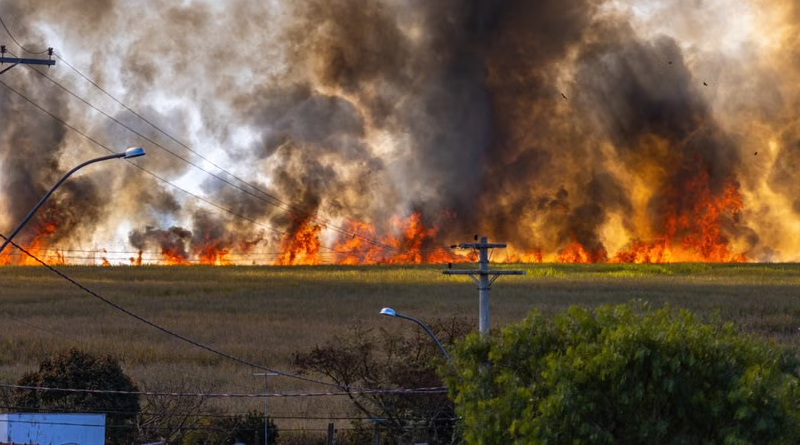
Images of vast wildfires sweeping across parts of Europe, North America and elsewhere have become an all too familiar feature of the current news cycle. Communities have been forced to evacuate, thousands of hectares of forest have been destroyed, and firefighters have faced increasingly dangerous conditions as prolonged heat, drought and strong winds combine to fuel fast-moving blazes.
While no single wildfire can be attributed solely to climate change, scientists agree that rising global temperatures are creating the conditions in which many wildfires become more likely, spread more rapidly and burn more intensely. Longer periods of hot, dry weather leave vegetation more susceptible to ignition, while more frequent heatwaves increase the risk that small fires can quickly grow into major emergencies.
Wildfires are just one example of how a changing climate is affecting the world around us. From more intense rainfall and flooding to rising sea levels and prolonged droughts, the impacts are becoming increasingly visible. Yet despite the growing number of headlines, many people remain uncertain about what climate change actually is, what causes it and why it matters. Understanding the basics is the first step towards making sense of one of the most significant environmental challenges of our time.
Climate change is one of the defining challenges of the 21st century
Often surrounded by complex scientific language, political debate and misinformation, at its heart, climate change is relatively simple. It refers to long-term shifts in the Earth’s average temperatures and weather patterns, with human activity now recognised as the primary driver of the rapid changes being observed around the world.
The Earth’s climate has always changed naturally over millions of years. Ice ages have come and gone, sea levels have risen and fallen, and temperatures have fluctuated due to natural events such as volcanic eruptions and changes in the planet’s orbit. What makes today’s climate change different is the speed at which it is happening and the overwhelming evidence that it is being driven by greenhouse gas emissions produced by human activity.
Greenhouse gases
Gases such as carbon dioxide, methane and nitrous oxide, occur naturally in the atmosphere and play a vital role in keeping the planet warm enough to support life. Problems arise when large amounts of these gases are released through burning fossil fuels, deforestation, agriculture and industrial processes. The extra greenhouse gases trap more heat, strengthening what is known as the greenhouse effect and causing global temperatures to rise.
Even relatively small increases in average global temperature can have significant consequences. Warmer oceans and air contribute to more frequent and intense heatwaves, changing rainfall patterns, longer droughts in some regions, heavier rainfall and flooding in others, and the melting of glaciers and polar ice. As sea levels rise, coastal communities face increasing risks from erosion and flooding.
Climate change also affects ecosystems, wildlife and people
Many plants and animals struggle to adapt as temperatures change faster than they can evolve or migrate. Some species are moving into new areas, while others face declining populations as habitats disappear or become unsuitable.
The effects are also being felt by people. Farmers must adapt to changing growing conditions, businesses face greater disruption from extreme weather, and health services are seeing the impacts of hotter summers and changing patterns of disease. In many parts of the world, climate change is placing additional pressure on food supplies, water resources and infrastructure.
Scientists have spent decades studying the Earth’s climate using observations, satellite data, historical records and computer models. Organisations around the world have concluded that the evidence for human-caused climate change is unequivocal, with international scientific assessments consistently showing that greenhouse gas emissions are the main cause of recent global warming.
Addressing climate change
Two complementary approaches are required. The first is mitigation, which means reducing greenhouse gas emissions by improving energy efficiency, expanding renewable energy, protecting forests and developing cleaner technologies. The second is adaptation, which focuses on preparing for changes that are already happening by strengthening flood defences, improving water management, designing more resilient infrastructure and helping communities cope with increasingly extreme weather.
Governments, businesses and individuals all have a role to play. National policies can encourage cleaner energy and lower emissions, while companies are investing in more sustainable products and processes. Individuals can also contribute through choices such as reducing energy consumption, travelling more sustainably, cutting food waste and recycling, although experts agree that meaningful progress depends on action at every level of society.
Climate change is a global issue, but it is also a local one. Its impacts differ from place to place, yet no country is entirely immune. Understanding the science behind climate change is the first step towards making informed decisions about how societies respond. While the challenge is significant, advances in technology, growing public awareness and international cooperation provide reasons for optimism that the worst impacts can still be limited if action continues at pace.
SOURCES
The Intergovernmental Panel on Climate Change (IPCC)
The UK Met Office – Climate Change Explained
NASA – Global Climate Change: Vital Signs of the Planet
The UK Climate Change Committee (CCC)
The United Nations Climate Change (UNFCCC) resources