
TOURISM IN AFRICA
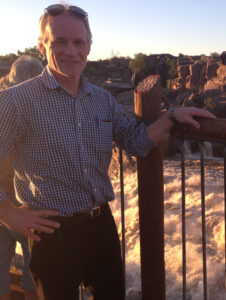
Vivian McCarthy is the Director of Acacia Africa running tours in Africa and jumping between there and his home in the UK. Here Vivian tells us about his first introduction to Africa and why he has made travelling there his career.
Why travel and why Africa in particular?
I have been involved with Africa for over 30 years, and while I wasn’t born there – I am originally from New Zealand and lived in the UK for most of my professional life – I feel the continent has almost adopted me.
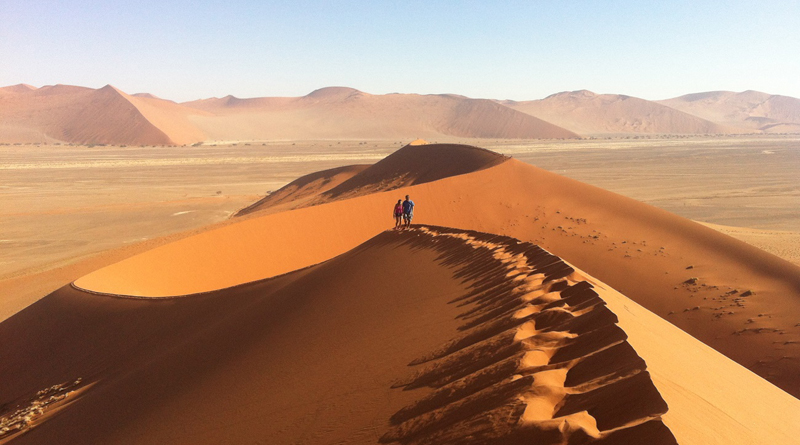
My first real encounter with Africa was in my late twenties, travelling as a passenger on a trans-Africa tour from London to Johannesburg. In total, six months on a truck – camping, crossing deserts and rivers, driving through thick jungle and over vast empty plains – and experiencing an enormous variety of scenery, landscapes, and cultures throughout.
When I finished that first trip, I returned to work in travel and tourism but quickly realised that I had to get back to Africa. I was lucky: in the late 1980s there were many operators expanding into Africa, and within a matter of months I was back on the road, this time as a tour leader. I spent several years leading extended Trans-Africa trips before eventually returning to the UK to take up an office-based role where I could focus on the operational and administrative tasks that go into making these tours possible.
Since then, I’ve been part of the Acacia Africa story, balancing the operational side of running tours with as many trips back to Africa as I can.
For me, it’s not just a career: it’s a personal attachment. I’ve spent nights under acacia trees, been woken by wildlife, and stood drenched in the spray of Victoria Falls. Africa changes you, and once it gets hold of you, it doesn’t let go.
For a long time, we’ve been told that tourism in Africa is a good thing and that it brings jobs, economic stability, and opportunity for local people. How true is that really?
There’s truth in it, but it isn’t as simple as the slogan makes it sound. Tourism in Africa does create employment; actually, it is one of the largest employers, particularly for young people and women. It also brings in much-needed hard currency, which is vital. But the key question is always: who benefits?
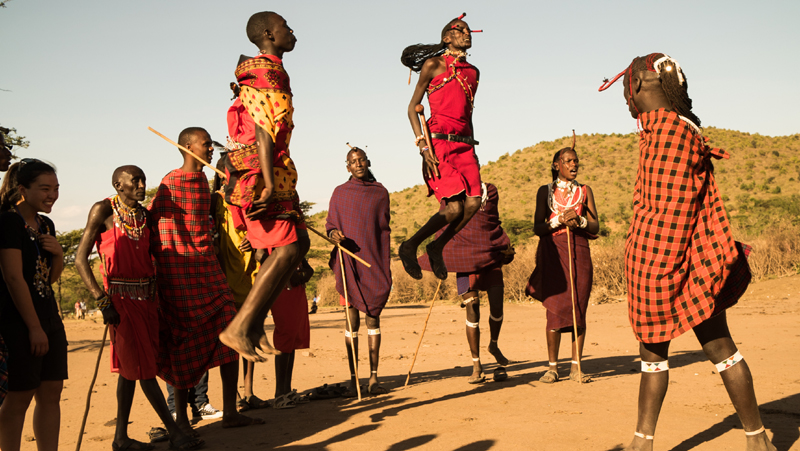
In the best cases, tourism supports communities directly. For example, in Kenya’s Masai Mara, the Maasai people are involved in the administration of the reserve. They see a tangible return from visitors coming to the reserve, which makes conservation meaningful. People protect what they benefit from. If tourism doesn’t improve lives, then it can feel imposed, and resentment grows.
I think one of Africa’s strengths is that mass tourism never fully arrived. Unlike some parts of southern Europe, which appear to be struggling with visitor numbers, much of Africa remains far from saturation. That’s both a blessing and a challenge: it means experiences are authentic and powerful, but it also means the economic potential isn’t fully realised.
How has this changed over the last few years?
Tourism is constantly evolving. In the early 1990s, the long overland expeditions across the entire continent were popular, and you could spend months on a truck travelling from London to Harare or Johannesburg or Cape Town. Those days have largely gone. Most people don’t have six months free anymore. Instead, the focus has shifted to shorter, more concentrated trips, often in East or Southern Africa, where game parks and iconic landscapes can be reached in a matter of days.
At the same time, there’s been a growth in awareness of responsible tourism. Travellers are more conscious of where their money goes. They ask, do local communities benefit? Are conservation projects genuine? Is the trip sustainable? It is a healthy development in my view because it pushes operators and governments to be more accountable.
Of course, the pandemic hit Africa hard, just as it did the world over. Many clients had their long-planned holidays cancelled, and guides, drivers, and rangers lost their livelihoods overnight. It was as sudden as it was unexpected. It reminded me that tourism isn’t just about leisure for visitors; it’s an economic lifeline for many inside Africa.
We also hear a lot about conservation of wildlife, with national parks and rangers being touted as the great success stories. How true is this? Is conservation of wildlife and the natural environment really working?
It’s a mixed picture. There are some very real successes. Botswana is interesting because of its broader “high-value, low-volume” tourism policy. The government has chosen to attract fewer visitors but those who spend more. In places like the Okavango Delta and Chobe National Park, it means sensitive ecosystems experience lower visitor pressure but still generate higher per-head revenue. It’s a deliberate choice that has probably helped keep wildlife numbers stable and habitats intact, and it’s one of the reasons Botswana has such a strong reputation for sustainable safari tourism.
Across the border in Zimbabwe, Matobo National Park (also called Matopos) is another good example. It’s not as well known internationally as Kruger or Serengeti, but it’s a jewel of a park and one we include on our tours. Matobo is important because of its population of both black and white rhino, both under immense pressure across Africa. Here, conservation has combined strong ranger protection with community engagement, and visitors have a chance to track rhino on foot (guided). That creates a very different kind of connection: viewing wildlife on foot is a very different experience, one that helps you understand the fragility of the species and efforts made to protect it. The fact that rhinos survive here, despite the global pressures, is itself a measure of success.
Elsewhere in Africa, we’ve seen similar benefits when local communities are part of the equation. Kenya’s Masai Mara, as I mentioned earlier, is a positive story. When the Maasai are involved in managing the land, it’s in their interest to ensure wildlife thrives, because tourists come to see it.
But there are still challenges, for example, poaching, human-wildlife conflict, and the pressure of development. Parks like Kruger in South Africa are under constant strain. Conservation only works if local people are part of it. For instance, if elephants trample a community’s crops, there is a strong incentive for them to get rid of the elephants unless they see a benefit from visitors coming to see the same elephants.
And we mustn’t forget the sheer scale of Africa. A game park is not a zoo; it is a vast ecosystem. That’s its beauty, but it also makes conservation complex and expensive.
What are some of the negative issues that tourism is bringing to Africa?
Tourism, even with the best intentions, can bring problems. One is inequality: large international operators come into an area and flood it with visitors and capture the profits, with only a small trickle reaching local communities.
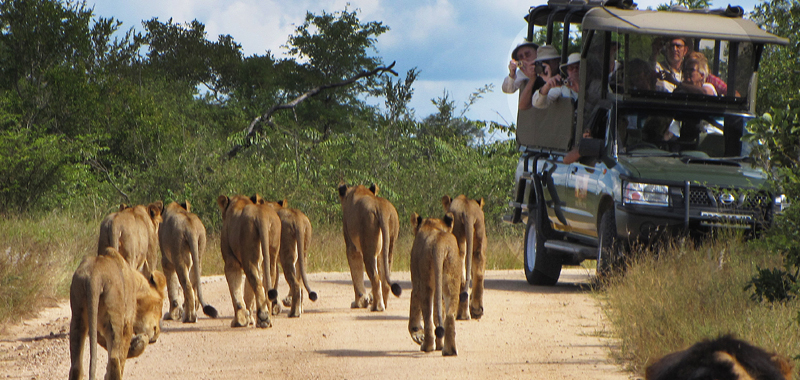
Environmentally, there can be over-concentration. In the Maasai Mara and Ngorongoro Crater, for example, you can sometimes see a queue of vehicles around a single lion. It takes away from the wilderness experience and puts stress on the animals.
What can be done about this?
The solution lies in balance and inclusion. Communities must have a stake in tourism, not just as employees but as stakeholders. When local people are partners, they see the benefits directly.
Governments need to regulate sensibly, ensuring that tourism profits aren’t syphoned away but reinvested in conservation and infrastructure. Operators have a responsibility: using local suppliers, employing local staff, and educating travellers about respectful behaviour.
What are the positives? Can we still travel to Africa as tourists and make a positive impact?
Absolutely. Tourism is one of the strongest forces for conservation in Africa. Without tourism, many national parks would not survive. Visitors bring revenue that pays for rangers, protects wildlife, and funds schools and clinics.
And on a personal level, travel changes perspectives. When someone from Europe or Australia experiences Africa and sees an elephant or lion or herd of buffalo, he or she carries those memories home, and it’s those memories that often help create long-term advocates for conservation.
So yes, you can travel and have a positive impact.
How can we do this? Any tips?
My first tip is simple: do your research. Look for operators who are transparent about where your money goes. Ask questions: do they employ local staff? Do they support community projects?
Travel in smaller groups if possible. Large convoys of vehicles are disruptive. Small groups are lighter on the land and more flexible.
Respect wildlife. Remember, you are not in a zoo. Don’t pressure your guide to drive closer or off-track. Part of the magic of Africa is experiencing animals on their terms.
And finally, be open. Come for the Big Five if that’s what attracts you, but be ready to discover birdlife, landscapes, and cultures you may not have expected. Some of the richest experiences are the unscheduled ones: a meal shared or an unplanned stop are often what you carry with you.
What needs to change to ensure Africa reaps the benefits of international tourism without the negative impacts?
At a macro level, governments have to take the lead. They must ensure policies support sustainable tourism, with revenue feeding back into conservation and communities. Transparency is essential: corruption or mismanagement undermines trust and damages the sector.
Regionally, countries can learn from each other. Botswana’s conservation model, Kenya’s Maasai involvement, and its community-led approaches all offer lessons.
On the industry side, we need to resist the temptation of mass tourism. Africa’s strength lies in its authenticity and space.
Ultimately, the people who live alongside Africa’s wildlife must see tangible benefits. If they do, conservation works. Much depends on that principle.
Where can we find out more?
Website: acacia-africa.com
Facebook: @Acacia.Africa
Instagram: @acaciaafrica