
HABITS TO HELP THE ENVIRONMENT
In a world where every gram of carbon matters, there are five daily habits that, with slight adjustments, can help micro-offset carbon usage. These insights are essential not just for personal responsibility but for the collective effort needed to fight climate change.

SCREEN TIME, SCROLLING & SOCIAL MEDIA: While scrolling through social media may seem harmless, it’s all too easy to get carried away. Did you know that just one minute on Instagram uses over one gram of carbon? Plus, the energy consumption of data servers and the manufacturing processes of electronic devices all contribute to carbon emissions.
Top Tips: Use social media on Wi-Fi rather than data, reduce live streaming in favour of pre-recorded video and set yourself a time limit for your social media use. You can also use this knowledge to educate your followers.

EMAILING: Every time you send an email it gets stored in multiple locations around the world to keep it safe… and it gets downloaded from a server every time you search for an old email. Did you know that sending 100 emails a month uses 400g of carbon?
Top Tips: Send download links rather than attachments, use smaller logos and images, and declutter your ‘inbox’ AND ‘deleted’ box regularly to get rid of unwanted items.

GREEN BANKING: Each time you tap your card or make a payment online, little bytes of payment data start a huge journey where they get verified by your bank, the payee and the recipient. It also gets sent to other agencies and runs through a huge security system using a total of 3.72g of CO2 per payment.
Top Tips: Believe it or not but Green Banking does exist so find a bank that invests in environmentally friendly practices. You can also plan ahead, and order regularly used items in bulk rather than paying for multiple, smaller shipments across the year.

MAKING A BREW: Did you know that we Brits drink 100 million cups of tea every day*? Boiling water excessively in kettles is a surprisingly energy-intensive daily task and uses around 0.1 kWh to boil a litre of water, contributing to 2,649,792 kWh of wasted electricity. That’s enough to power almost 1,000 homes for a year.
Top Tips: Kettles with a ‘quick boil’ function typically use less energy so if you’re in the market for a new kettle, do your research for an energy saving model. Alongside this, only boil the necessary amount of water, so if it’s a brew for one, a mug full of water is all you will need.
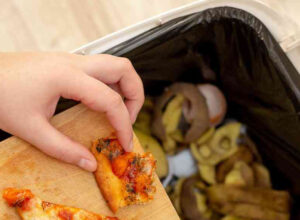
FOOD WASTE: More than 10 million tonnes of food is wasted every year in the UK, producing 18 million tonnes of greenhouse gas emissions.** WRAP estimates that 70% of food waste comes from households and the majority of food that is thrown away is considered edible. These figures equate to a loss of £1000 each year for a household of four.***
Top Tips: We are learning valuable lessons from social media influencers and TV shows on how to buy smarter, consume more efficiently, and reduce food waste. Weekly meal planning ensures you purchase only what you need, while freezing leftovers saves both time and money. Keeping your fridge and cupboards organised will help you prioritise food that needs to be eaten first. Additionally, being mindful of ‘best before’ and ‘use by’ dates and using the ‘look, smell, taste’ test will prevent you from unnecessarily discarding perfectly edible food.
CULTIVATING SUSTAINABILITY STARTS WITH THE SMALLEST OF ACTIONS
By embracing these top tips for micro-offsetting, we can collectively make a huge impact on reducing our carbon footprint. Each kettle boiled mindfully, each shortened social scroll, and each shopping list carefully curated, is a step towards a greener tomorrow.
My Square Metre identifies often overlooked daily carbon-producing activities such as social media scrolling and micro-offsets activity through wildflower planting on designated meadows that are protected for 30 years to enable biodiversity to thrive.
Wildflower planting is a highly effective offsetting option as wildflowers sequester carbon within the first year of planting, in comparison to tree planting which can take years to sequester C02. One square metre of wildflowers can provide enough food for 24 bees each year, for 30 years.
ABOUT THE AUTHOR
Ed Crowther is from My Square Metre an online carbon calculator used to work out and offset carbon production by planting wildflowers.
The team works to source land, analyse it and prepare it for planting. They plant new areas of wildflower meadow with seeds bought by uses wishing to offset their carbon use. The planting also increases the biodiversity on the land which is protected by My Square Metre for a minimum of 30 years.
My Square Metre is based in Lincoln, and it developed its environmental and ecological strategy with experts at the University of Lincoln, to perform surveys, develop its planting policy and to strategically target land that will have the most positive impact.
Sources
*** wrap.ngo/resources/report/household-food-and-drink-waste-united-kingdom-2021-22