FAST FASHION – WHAT DOES IT REALLY COST?
A new outfit for the weekend, a bargain dress for a night out or a T-shirt that costs less than a cup of coffee. Fast fashion has made keeping up with the latest trends cheap and easy. But what is the true cost of your bargain?
From field to fabric
If we try to picture the environmental impact of fashion, many of us will imagine mountains of discarded clothing. But we should be concerned about a garment’s life cycle long before it even reaches a shop, market stall or doorstep,
Cotton—our go-to material for T-shirts—is a natural fibre, which is a good thing, right? But growing cotton requires land, water and (depending on farming practices) fertilisers and pesticides. In regions already experiencing water shortages, cotton cultivation can place additional pressure on rivers, reservoirs and groundwater supplies.
Synthetic fabrics bring a different set of problems. Polyester, nylon and acrylic are derived from fossil fuels, and their manufacture requires energy and chemicals, adding to their environmental footprint.
Neither natural nor synthetic fibres are automatically environmentally friendly. Cotton may be biodegradable under suitable conditions but can be resource-intensive to produce. Polyester is generally more durable and often requires less water during fibre production, but is essentially plastic, with consequences that extend well beyond manufacturing.
 A colourful problem
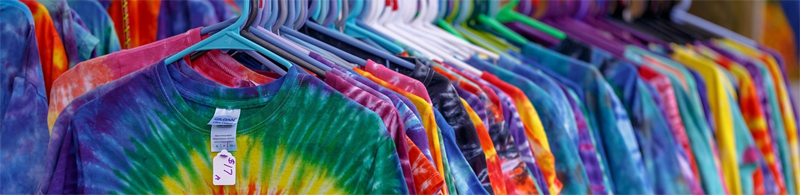
Once fibres have been produced, they must be spun, woven or knitted, treated and dyed. These processes can require considerable quantities of water, energy and chemicals.
Dyeing and finishing are particularly problematic where wastewater treatment is inadequate. Chemical residues and dyes discharged into waterways can damage aquatic ecosystems and affect communities relying on those waters for drinking, fishing or agriculture.
Then there is the energy required to power textile mills, operate machinery, heat water and dry fabrics. Where manufacturing relies heavily on fossil-fuel electricity or heat, the carbon footprint increases further.
By the time a garment is ready to be sold, it may already have accumulated a substantial environmental debt.
Fashion at the speed of the internet
Traditional fashion retailers once worked around seasonal collections. Fast fashion accelerated that cycle, introducing new styles throughout the year. Ultra-fast fashion has taken the process further, using online shopping platforms, social media trends and rapid production systems to turn fleeting consumer interests into garments available for purchase almost immediately.
 The business model encourages constant browsing, frequent purchases and the idea that an outfit can become outdated almost as quickly as it arrives.
The environmental consequences are not simply about producing cheap clothes. They are about producing enormous quantities of them, often with little expectation that individual garments will remain in use for very long.
A garment might begin life as raw material in one country, become fabric in another, be assembled somewhere else and finally be shipped halfway around the world to its purchaser.
Shipping by sea can be relatively efficient per item, but rapid delivery requirements may involve air freight, which has a much higher emissions footprint. Individual packaging, returns and additional journeys through distribution networks all add to the environmental cost.
And with online retailers making returns increasingly convenient, some garments may travel considerable distances without ever being worn.
The pollution we cannot see
Every time synthetic garments are washed, tiny fibres can break away and enter wastewater. These microplastics are small enough to pass through some filtration systems, eventually reaching rivers, oceans and soils.
Research continues into the long-term consequences of microplastic pollution, but the persistence and widespread distribution of these particles are already serious environmental concerns.
Washing at lower temperatures, using gentler cycles and keeping clothes for longer can help reduce some impacts, but they cannot eliminate the problem entirely.
The final destination
Eventually, even the most cherished clothes wear out. Others are discarded because they no longer fit, have fallen out of fashion or simply aren’t wanted.
Charity shops, resale platforms and clothing banks provide opportunities for reuse, but donating a garment doesn’t guarantee it will find another owner.
Some unwanted clothing is exported overseas, where it may be resold. However, poor-quality or unsaleable garments can become a waste-management problem for the receiving countries, particularly where disposal infrastructure is limited.
Recycling can be a possibility, although turning old clothes into new clothes is far from straightforward. Blended fabrics, dyes, coatings, buttons and zips complicate processing, while mechanical recycling can shorten fibres and reduce their suitability for new garments.
Consequently, much textile waste is still incinerated, sent to landfill or recycled into lower-value products rather than turned into new clothing.
 What do we do?
There is nothing inherently wrong with affordable clothing. For many households, it is a necessity rather than a lifestyle choice. Nor is buying expensive clothing necessarily more sustainable if it is rarely worn.
The problem lies in a system that encourages us to regard clothes as disposable.
Manufacturers and retailers have a responsibility to improve production methods, reduce pollution and design garments that last longer and are easier to repair or recycle. Governments can support this through stronger environmental standards, greater transparency and measures that make producers accountable for textile waste.
Consumers have a part to play too. Buying fewer garments, choosing clothes that will be worn repeatedly, repairing rather than replacing and making use of second-hand markets can all reduce demand for new production.
But individual choices alone cannot solve a problem built into the industry’s business model.
The fashion industry has become remarkably efficient at making clothes quickly and cheaply. The challenge now is to become equally efficient at making them sustainably.
More environment focused reading:
HABITS TO HELP THE ENVIRONMENT
Article by Ed Crowther from My Square Metre, an online carbon calculator used to work out and offset carbon production by planting wildflowers.