
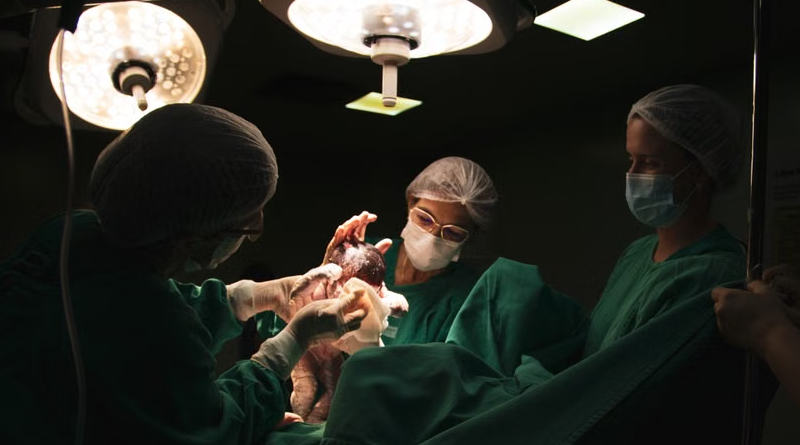
CAREFUL WERE BLAME FALLS FOR MATERNITY CARE FAILURES
Recent independent national enquiries into maternity care in the UK have invited patients to submit accounts of their experiences via public self-reporting systems and it is clear that mothers and families mostly blame the actions or inactions of frontline workers for their plight: midwives who did not listen or take their concerns seriously; staff who pre-judged them or treated them differently; obstetricians, anaesthetists and paediatricians who did not respond fast enough or even at all.
The public are right to feel that they have been let down, but by focusing their anger solely on key individuals they have interacted with in healthcare settings, they are missing the wider problems.
Systemic barriers to safe care
The most commonly used adjective to describe NHS services is “underfunded” but this is simply an excuse that hides a much more sinister problem that no-one has the appetite to address. Funding for maternity care has increased enormously over the last two decades but the service continues to deteriorate. This is because NHS resources are not always mobilised to achieve the best clinical outcomes for patients.
For many decades, the focus for maternity management teams has been to ensure value for money and adopt clinical safety strategies that placate healthcare commissioners and regulators. In practice this means implementing processes which sound good in theory but absorb vast resources and prioritise back-office roles rather than frontline care. This leads to fewer clinically active staff as most are siphoned off into managerial roles. It also leads to reduced capacity and micromanagement of a service in which the meagre “left-over” resources that trickle down onto the shop floor are utilised as best as possible. Unsurprisingly, this leaves many frontline staff frustrated and burnt out, feeling enslaved to a system of care which prioritises targets and league tables over patient outcomes. Speaking up can have dangerous consequences, so silence prevails and problems go on for longer.
Expectations collide with reality
Given the state of the frontline service, it is unsurprising that many women turn to online sources for advice, information and guidance. These are inviting, friendly and accessible 24/7 but the information they provide is frequently inaccurate and almost always fails to provide individualised guidance. Parent education classes and social narratives around birthing mostly focus on the so-called “low risk” birth. These are powerful, even coercive, but often set unachievable ideals.
Patients often describe what should have happened yet seem able to dissociate this with the anti-intervention narratives they subscribed to prior to delivery. They do not always appreciate how stressful midwives find it to counter the directives laid out in a mother’s birth plan, or how much objection many mothers raise when presented with an alternative if complications arise. Staff are sensitive to accusations of fearmongering if they discuss risks or of dismissing maternal choice if they challenge requests. There is a natural tendency to listen more to what we want to hear and overlook what we think is irrelevant or unlikely.
Shared responsibility is overlooked
The net effect of the deficiencies and inefficiencies in care, and the misinformation and disinformation, is often a great deal of disappointment, anger or grief and calls for retribution.
But who should be held accountable?
The national screening committee who limited antenatal tests which might have alerted the mother to a problem? The management team who allocated funds to tick-boxing processes ahead of the CQC inspection rather than buying new equipment or employing more frontline staff for the unit? The Trust leadership team who promised that “lessons will be learnt” following previous incidents?
Or what about the antenatal class instructor who promised an empowering experience controlled perfectly by nature? The online birthing guru? The yoga teacher? The neighbour, best friend or older sister?
No, these people rarely become the target of ire because none of them were present providing direct care. The fact that they all played a pivotal role in creating the conditions in which care is delivered or the ideology that set the mother up for failure is overlooked. Only the frontline staff present in the room with the mother at the time of the crisis are held responsible.
It is certainly true to say that poor maternity outcomes are often, but not always, avoidable. But to avoid them requires everyone to be on the same page and unafraid to speak out. Mothers have quite rightly been given the space to have their say. Their anger, whist entirely justifiable is often misdirected at the frontline staff who could undoubtedly do better in some cases but at present simply feel like the fall guys. If we are to have any hope that matters will improve, mothers and their relatives will need to look beyond their rage and dig much deeper to identify other key contributors to this complex problem and commit to tackling them.
ABOUT THE AUTHOR
 Dr. Lorin Lakasing is an NHS consultant in obstetrics and fetal medicine. She draws on her 30 years of clinical experience in maternity care to give an insider’s view of the current worrying situation and its development, and suggests how we might move towards the safe, effective NHS maternity service that everyone deserves. Her latest book, “Delivering the truth: Why NHS maternity care is broken and how we can fix it together” is about the stories behind the headlines, revealing the reasons why major stakeholders in this vital service have inadvertently been encouraged to pursue different agendas, and how that has made effective, collaborative working towards optimal clinical outcomes almost impossible.
Web: lorinlakasing.com
Amazon: Delivering the Truth